

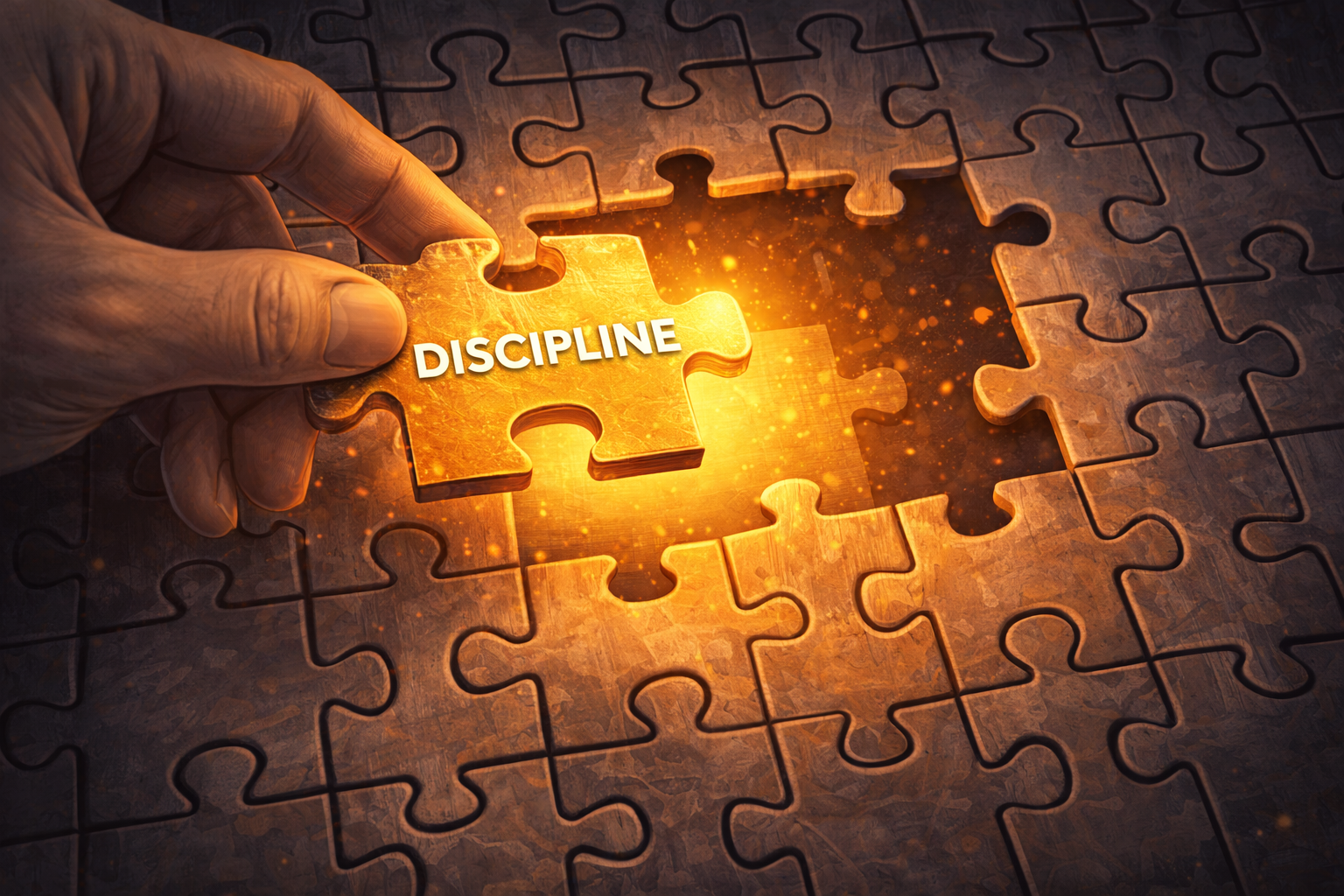
You Need More Discipline. You Need to Stop Running From the Real Problem
You keep telling yourself that discipline is the missing piece. That if you could just force yourself harder, focus better, or stay consistent longer, everything would change. But that is not the truth. The truth is harder to face: you already know what needs to happen. What is missing is not knowledge. It is your willingness to face the fear, identity, and discomfort that keep you stuck.
You Need More Discipline. You Need to Stop Running From the Real Problem
There comes a point where you have to stop lying to yourself.
Not in a dramatic way. Not in a cruel way. In a clean way.
You have to stop pretending that another morning routine, another productivity trick, another motivational video, or another perfectly organized to-do list is going to fix what is actually going on underneath the surface.
Because you do not have an information problem.
You have an avoidance problem.
You already know that conversation needs to happen.
You already know your body needs better care.
You already know the business idea is not going to build itself.
You already know the application, the call, the boundary, the decision, the first step.
You know.
And still, you hesitate.
You scroll.
You think.
You prepare.
You research.
You make plans.
You tell yourself you are “working on it.”
But nothing really moves.
That is where frustration starts to build. Not only because life is not changing, but because deep down, you can feel yourself becoming someone you do not respect. Someone who keeps almost starting. Someone who keeps talking about change instead of stepping into it. Someone who confuses mental activity with movement.
That is the part that hurts.
Not just the missed opportunity.
The erosion of self-trust.
Every time you say, “I’ll do it tomorrow,” and then you do not, something gets weaker. Every time you promise yourself you are serious this time, and then you disappear back into distraction, your own mind starts to stop believing you. And when self-trust drops, everything gets heavier. Even simple decisions feel difficult. Even small actions feel loaded.
So no, this is not just about discipline.
That word is too shallow for what is really happening.
What is really happening is deeper, quieter, and more human than that.
You are not just failing to act.
Part of you is trying to protect you from action.
And until you understand that, you will keep attacking the symptom while ignoring the cause.


Your Brain Does Not Care About Your Goals as Much as You Think
Most people speak to themselves as if the brain is a loyal partner in growth.
It is not.
Your brain is not primarily built to make you fulfilled, ambitious, bold, or self-actualized. It is built to help you survive. It is built to avoid threat. It is built to keep you inside what feels familiar.
That matters because growth almost always feels unfamiliar.
Starting something new is unfamiliar.
Speaking honestly is unfamiliar.
Setting a boundary is unfamiliar.
Changing your habits is unfamiliar.
Showing up consistently in a new way is unfamiliar.
And your brain often reads unfamiliar as unsafe.
This is why the pattern is so frustrating from the outside. Consciously, you can know that sending the email will not kill you. You can know that applying for the opportunity is a smart move. You can know that going to the gym is good for you. You can know that leaving the unhealthy relationship is necessary.
But knowledge is not the same as emotional safety.
That is where people get confused. They think, “If I know what to do, why am I not doing it?”
Because knowledge lives on one level. Conditioning lives on another.
A person can intellectually understand what needs to happen and still feel internal resistance every time they move toward it. That resistance is not always laziness. Sometimes it is fear. Sometimes it is identity. Sometimes it is years of conditioning that trained the nervous system to choose comfort over uncertainty.
So what do you do?
You stop calling yourself lazy every time your system hesitates. And you start asking a better question.
Not, “What is wrong with me?”
But, “What is this part of me trying to protect me from?”
That question changes everything.

Fear Is Usually the First Layer
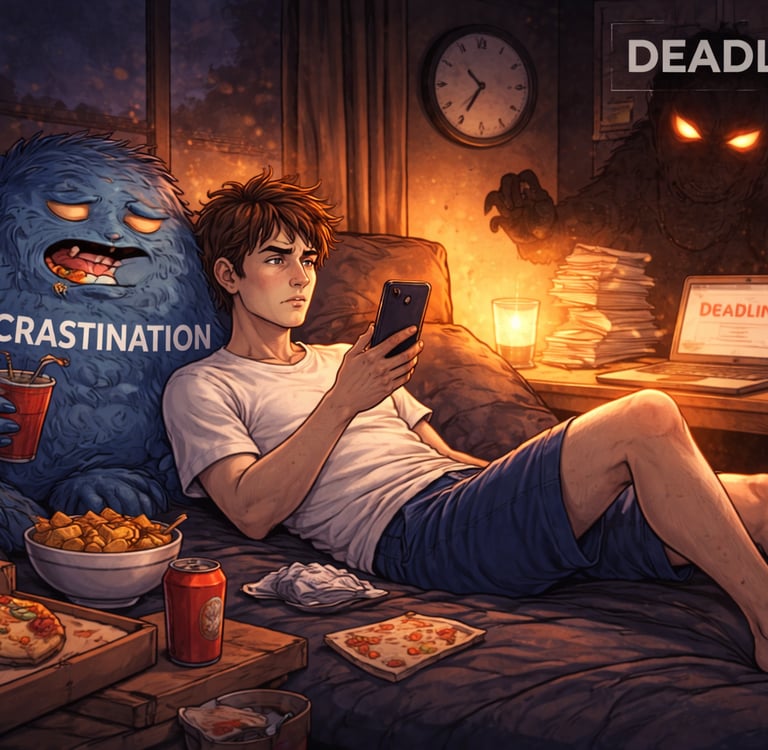
If you want to understand why you keep procrastinating, you need to stop looking only at your behavior and start looking at the fear underneath it.
Because fear rarely introduces itself clearly.
It does not always say, “I am afraid.”
It says:
“I need more time.”
“I need more clarity.”
“I need a better plan.”
“I just want to make sure it is right.”
“I work better under pressure.”
“I’m waiting for the right moment.”
That sounds rational. That sounds mature. That sounds responsible.
But a lot of the time, it is just fear in professional clothing.
A person says they are perfectionistic. Usually what they mean is they are afraid of being seen before they feel fully protected. A person says they are overthinking. Usually what they mean is they are trying to mentally control an outcome so they do not have to feel uncertainty. A person says they are a people pleaser. Usually what they mean is they are afraid of rejection, conflict, or being disliked.
Fear wears many masks.
And if you keep treating the mask instead of the fear, nothing changes.
Take a simple example. Someone wants to start posting online for their business. They know it could help them grow. They know it could create momentum. They know they need visibility. But they keep delaying. They say they are working on their brand, refining their message, learning strategy, preparing content.
Maybe some of that is true.
But often the real fear sounds more like this:
“What if people judge me?”
“What if nobody responds?”
“What if someone I know laughs at me?”
“What if I do all of this and still fail?”
“What if I finally try, and it proves I’m not good enough?”
That is the real conversation.
And until that conversation becomes conscious, the person stays stuck in a loop that looks productive from the outside but is emotionally designed to avoid risk.
This is why self-awareness is not optional. It is a requirement.
You cannot change what you refuse to name.
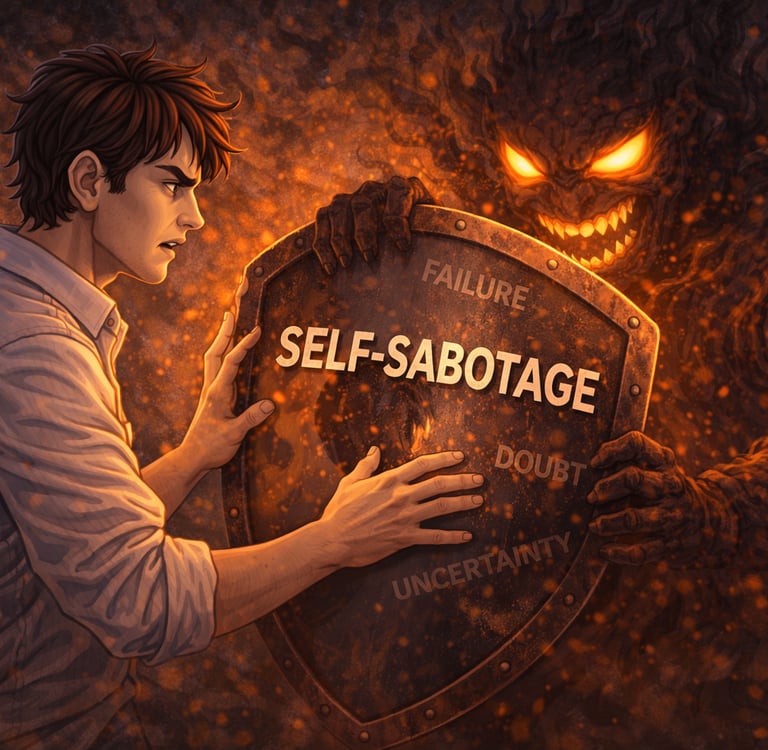
A Lot of Self-Sabotage Is Actually Self-Protection
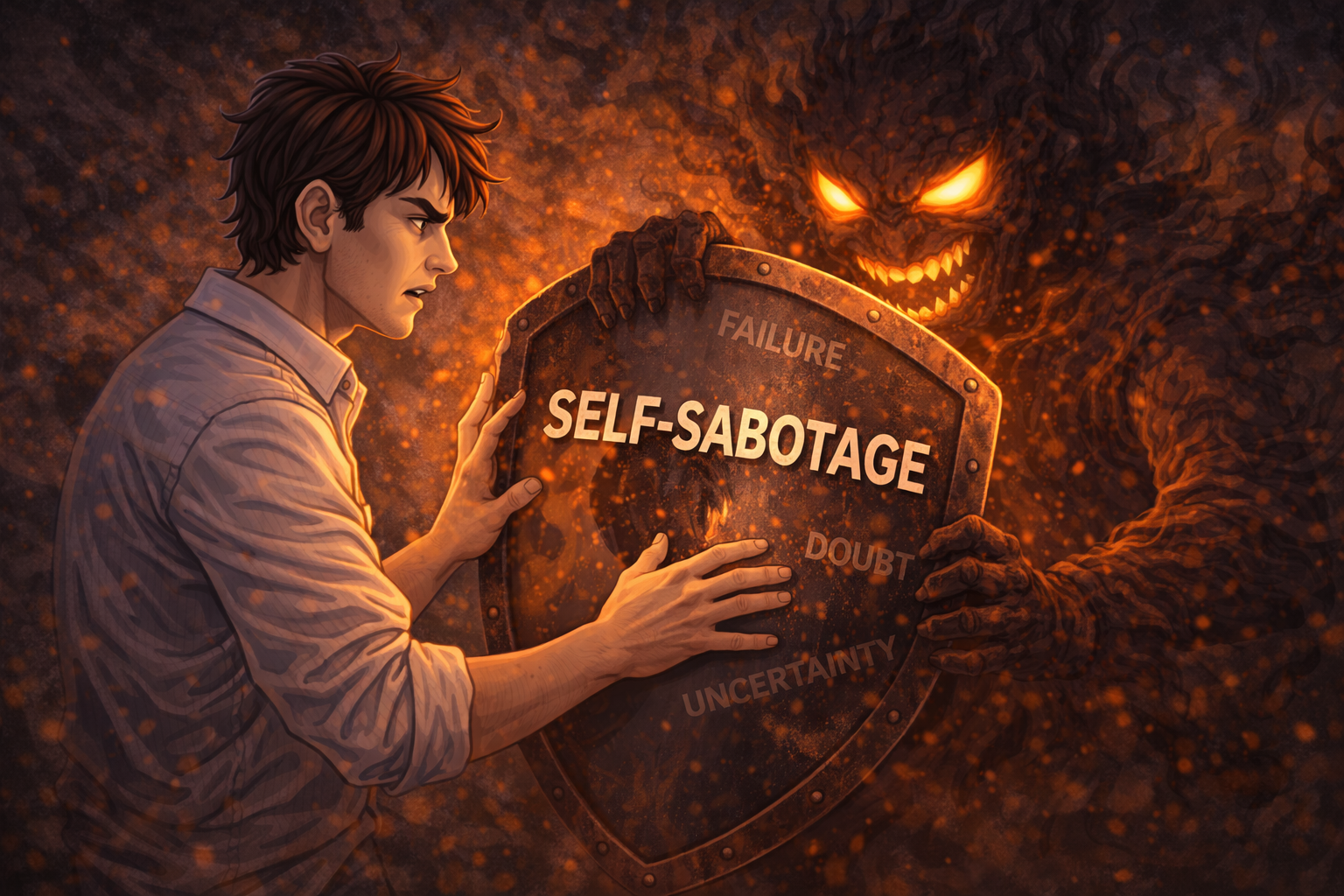
People love to use the phrase self-sabotage, but most of the time they use it without understanding what it means.
They say, “I sabotage myself.”
Maybe. But let’s be more precise.
Often what you call sabotage is actually protection.
You delay because part of you believes delay is safer than disappointment.
You shrink because part of you believes invisibility is safer than exposure.
You stay silent because part of you believes silence is safer than conflict.
You quit early because part of you believes walking away is safer than trying fully and failing honestly.
That does not make the behavior useful. But it does make it understandable.
And that matters, because you will never change deeply through shame alone.
You can bully yourself into short bursts of action. A lot of people do. They use guilt, pressure, comparison, and self-criticism to force movement. It works for a week. Sometimes for a month. But eventually the deeper pattern returns, because the root was never addressed.
Real change starts when you become honest enough to see the protection pattern without glamorizing it and without excusing it.
You look at it clearly.
“This part of me is not evil. It is scared. But it is also costing me my life.”
That is the balance.
Understanding without surrendering to it.
Compassion without passivity.
Clarity without self-pity.
Your Identity May Be More Limiting Than Your Fear
Fear is one layer. Identity is another.
And identity is often even more powerful because it works quietly.
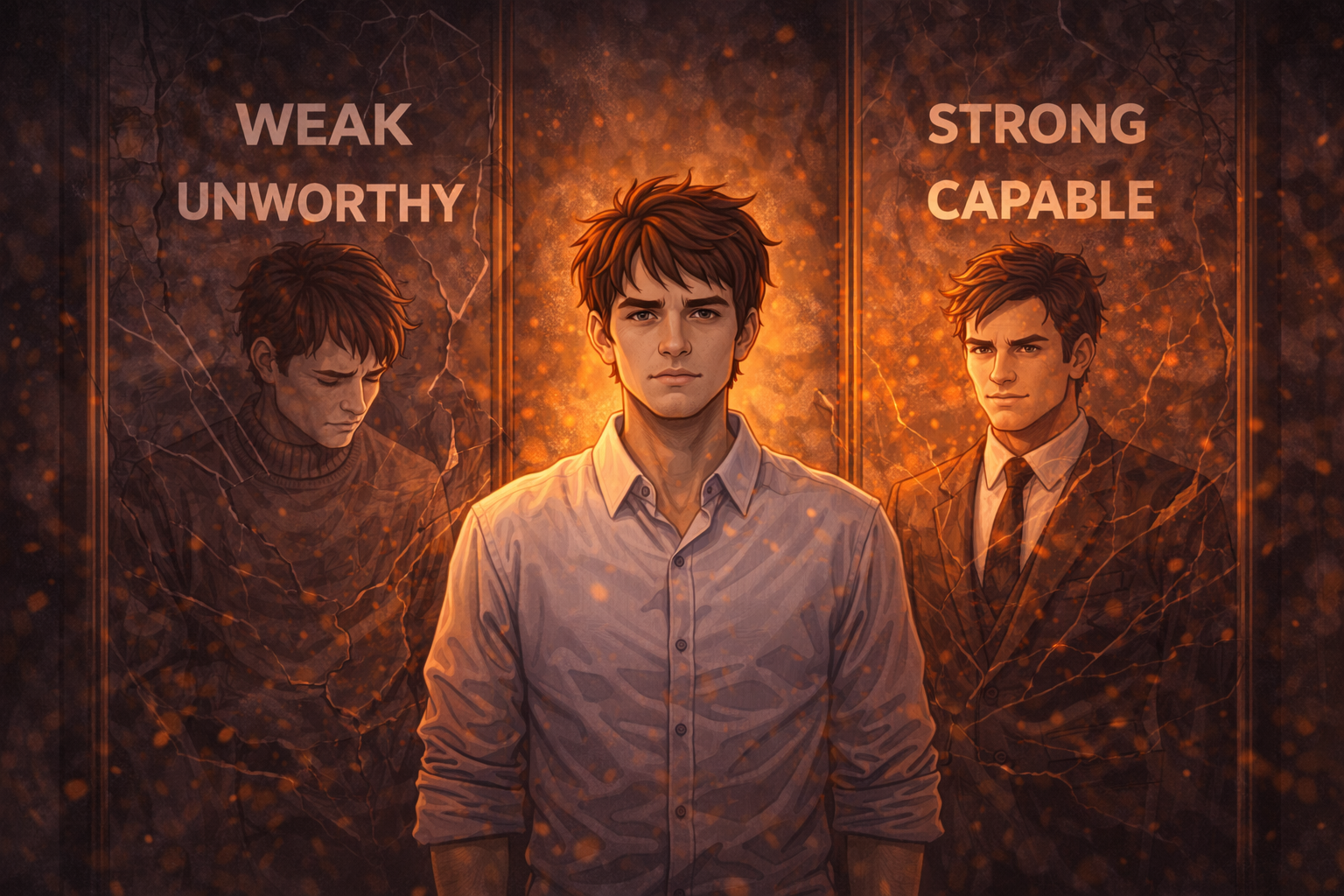
You may say you want confidence, consistency, health, success, leadership, peace, or growth. But if your internal identity still says, “I am not that kind of person,” your actions will keep drifting back toward what feels familiar.
This is one of the most important things people miss.
Your behavior is not only driven by your goals. It is driven by who you believe you are.
If you believe you are someone who always quits, you will find ways to quit.
If you believe you are bad with money, you will keep making money decisions that reinforce that story.
If you believe you are not attractive enough, smart enough, disciplined enough, or capable enough, your behavior will subtly align with that belief, even while you say you want more.
Why?
Because the brain values internal consistency.
It would rather keep a familiar identity than risk the instability of becoming someone new.
That is why change can feel so uncomfortable even when it is positive. It is not just about doing different things. It is about becoming unfamiliar to yourself. And that creates internal tension.
Imagine someone who has spent years telling themselves, “I never follow through.” Then one day they decide to become deeply consistent. At first, that will not feel empowering. It will feel strange. Forced. Exposed. Unnatural.
Not because consistency is wrong.
Because it does not yet match the identity.
This is where many people give up. They think, “This doesn’t feel like me.”
Exactly.
That is the point.
Growth often feels unlike you at first, because the version of you that created the current life is not the final version of you.
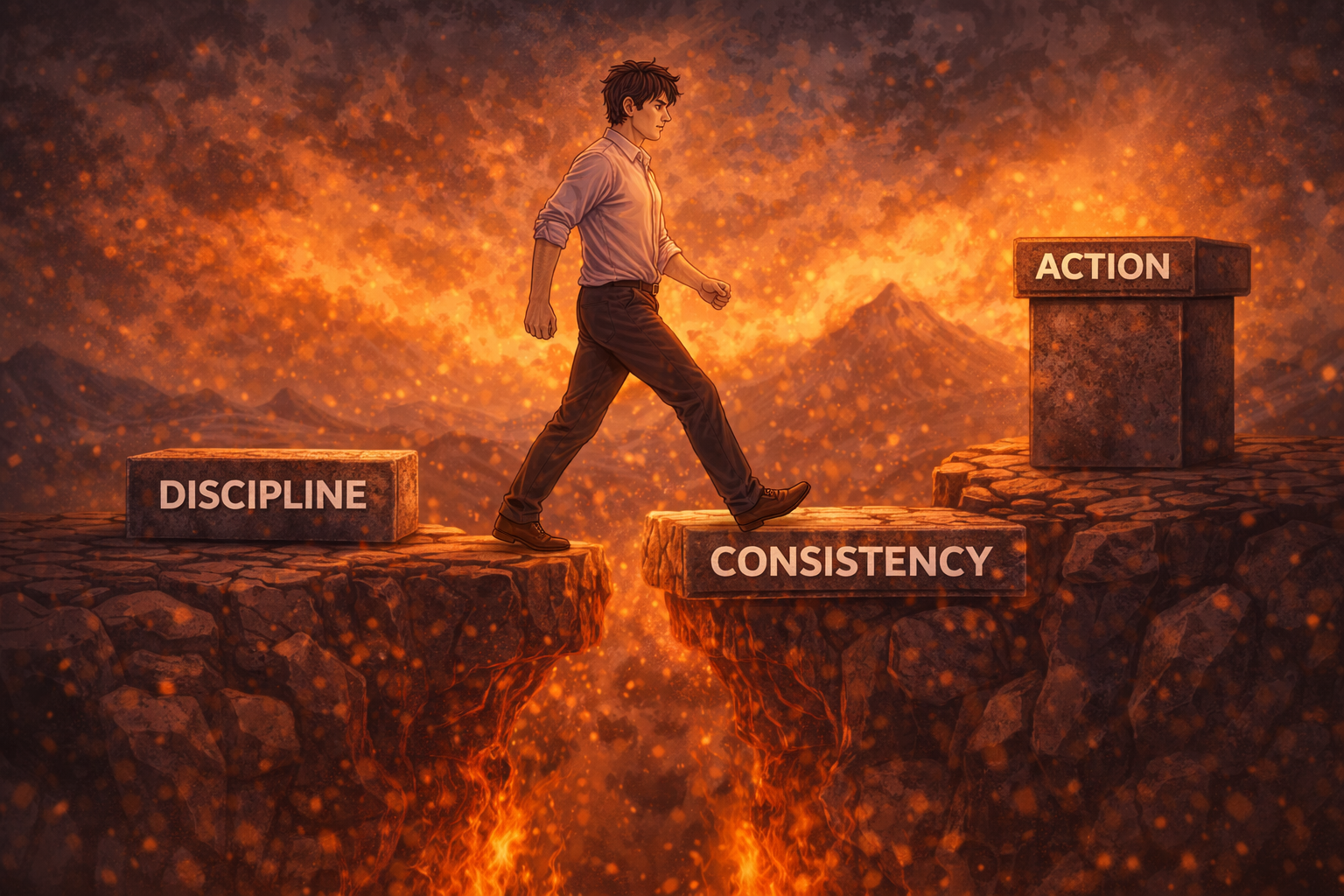
You do not wait to feel like a new person before you act. That keeps you trapped forever.
You act first.
Then the identity slowly catches up.
You follow through once. Then again. Then again. And after enough evidence, the mind starts to update the story.
Maybe I do follow through.
Maybe I can handle hard things.
Maybe I am becoming someone stronger.
Maybe this is who I am now.
Identity is not changed through affirmation alone. It is changed through evidence.
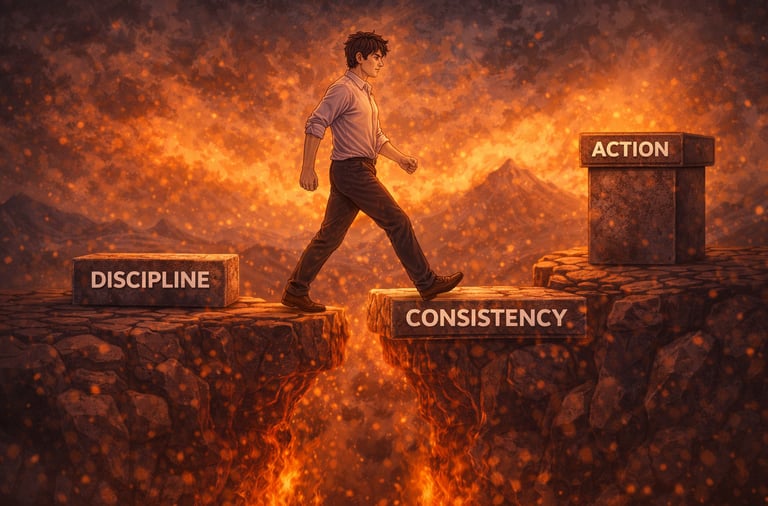
You Keep Looking at the Price of Action and Ignoring the Price of Staying the Same
This is another place where people stay stuck for years.
They obsess over what action will cost.
The effort.
The discomfort.
The embarrassment.
The uncertainty.
The possibility of getting it wrong.
And because they are so focused on the immediate emotional cost of doing something difficult, they never stop to seriously consider the cost of doing nothing.
That is a dangerous mistake.
Because inaction has a price too. It is just quieter at first.
Take work.
The cost of action might be real. Starting something new could mean risk, long hours, learning, self-doubt, rejection, instability, and the possibility that it does not work right away.
That is uncomfortable.
But what is the cost of inaction?
Years in a career that empties you.
Constant low-grade resentment.
Watching less capable but more courageous people build what you never started.
Becoming bitter because you kept choosing safety over self-respect.
Teaching yourself, year after year, that your fear gets the final vote.
Now take relationships.
The cost of action might be an honest conversation, setting a boundary, leaving what no longer fits, disappointing someone, or facing loneliness for a period of time.
That is painful.
But what is the cost of inaction?
Staying where you are unseen.
Betraying yourself to keep the peace.
Losing your own voice.
Normalizing disconnection.
Teaching yourself that your needs are negotiable.
Now take health.
The cost of action is discipline, discomfort, consistency, saying no to impulses, and facing how far you have drifted.
Again, not easy.
But the cost of inaction is heavier.
Lower energy.
Less confidence.
More physical pain.
More avoidance.
More years spent feeling disconnected from your own body.
Everything costs something.
The question is not whether there is a cost. The question is which cost you are willing to carry.
Most people choose the cheap comfort of avoidance now and end up paying the expensive price of regret later.
That is not strategy. That is delay with interest.
The Longer You Wait, the More the Pattern Becomes Your Personality
This is what makes prolonged inaction so dangerous.
At first, it feels like a temporary phase.
You tell yourself:
“I just need more time.”
“I’m figuring things out.”
“I’ll start when life calms down.”
“This is not the right season.”
Then months pass. Then years.
And eventually what was once a behavior starts to feel like identity.
You are no longer just someone who delayed one project. Now you think of yourself as someone who struggles with follow-through. You are no longer just someone who tolerated one poor relationship. Now you think of yourself as someone who always gets overlooked. You are no longer just someone who drifted from your health. Now you think of yourself as someone who is naturally undisciplined.
That is how a pattern hardens.
Repeated avoidance becomes self-concept.
And once that happens, change feels even harder, because now you are not only fighting behavior. You are fighting a story about who you are.
This is why you cannot keep treating small betrayals as harmless.
Every time you ignore what you know, you strengthen the wrong pattern.
Every time you follow through, even in a small way, you weaken it.
That is why small actions matter so much. They are not small psychologically. They are identity votes.


You Do Not Need to Feel Ready. You Need to Become Willing
Read that carefully.
You do not need readiness.
You need willingness.
Readiness is emotional. It comes and goes. It is unreliable. If you build your life around feeling ready, you will remain stuck in the waiting room of your own potential.
Willingness is different.
Willingness says:
“I do not like this, but I will face it.”
“I do not feel confident, but I will move.”
“I do not know exactly how this will unfold, but I will take the next step.”
That is power.
Not emotional perfection.
Not certainty.
Not total clarity.
Just willingness.
A person who is willing can build momentum. A person waiting to feel perfect stays frozen.
This is why starting badly is still better than fantasizing beautifully.
Your first attempt will likely be messy. Your first version may be weak. Your first conversation may be awkward. Your first routine may be inconsistent.
Good.
That is real life.
You are not here to look prepared. You are here to build capacity.
And capacity is built through repetition, not imagination.


What to Do Practically When You Notice Yourself Stalling
Once you understand the pattern, you need a way to interrupt it.
The first step is simple: get your thoughts out of your head.
Most people try to solve resistance internally. That rarely works well, because thoughts feel heavier when they stay abstract. Put them on paper.
Write:
What am I avoiding?
What am I afraid will happen?
What identity am I protecting?
What is the cost if I keep doing nothing?
What is the smallest step I can take today?
This matters because writing forces clarity. It slows the emotional swirl and turns vague tension into something visible.
Then shrink the step.
Not the dream. The step.
People often fail because they keep trying to emotionally prepare for the whole journey instead of just doing the next clean action.
Do not ask, “How do I build the entire business?”
Ask, “What is the next concrete move?”
Do not ask, “How do I become fully confident?”
Ask, “What is one action a more confident person would take today?”
Do not ask, “How do I fix my whole life?”
Ask, “What can I stop avoiding before the end of this day?”
The smaller the step, the less room fear has to perform.
Then use time to your advantage. Tell yourself you only need to begin for five minutes. Five honest minutes. This works because resistance is usually highest at the point of entry. Once movement begins, the emotional threat level often drops.
And then adjust your environment.
Do not keep pretending you will win against friction every day through willpower alone. Make the right action easier. Put distance between yourself and the distraction. Prepare before the moment of weakness arrives. Design your surroundings to support your direction.
If your phone is always within reach, distraction will win more often. If the unhealthy choice is always easy, you will keep taking it. If your environment constantly feeds the old identity, change becomes harder than it needs to be.
You do not need a perfect system. But you do need fewer excuses built into your daily life.


This Is Not About Becoming Harsh. It Is About Becoming Honest
Some people hear this kind of message and turn it into self-attack.
That is not the point.
The point is not to become cold with yourself. The point is to become clear with yourself.
There is a difference.
Clarity says:
“I see the pattern.”
“I understand why it is there.”
“I also see what it is costing me.”
“And I am done pretending it is harmless.”
That is mature.
Not blaming your past forever.
Not romanticizing your pain.
Not demanding perfect healing before action.
Just telling the truth and taking responsibility for what happens next.
You can acknowledge that your fear makes sense and still decide it will no longer lead your life.
That is leadership.
And that leadership starts internally, long before anyone else sees the results.

Final Reflection
You do not need another hack.
You do not need to wait for the perfect mindset, the perfect timing, the perfect mood, or the perfect version of yourself to arrive.
You need to stop handing power to the part of you that worships comfort and calls it caution.
Because the truth is simple.
Every day you delay what matters, you train yourself to distrust your own word.
Every day you avoid the necessary discomfort, you make the future heavier.
Every day you keep choosing what feels safe in the moment, you quietly reinforce the life you say you do not want.
At some point, you have to decide that the pain of staying the same is no longer acceptable.
Not because you are suddenly fearless.
Not because you have become perfectly disciplined.
But because you are finally more committed to truth than to comfort.
That is where change begins.
Not in hype.
Not in motivation.
In decision.
So stop asking whether you feel ready.
Ask yourself something better:
What am I avoiding that I already know needs to happen?
Then do not build a philosophy around it.
Do not overprocess it.
Do not wait for a better emotional state.
Take the next step.
Messy if needed.
Uncomfortable if required.
Small if necessary.
But real.
Because your life will not change when you think about it enough.
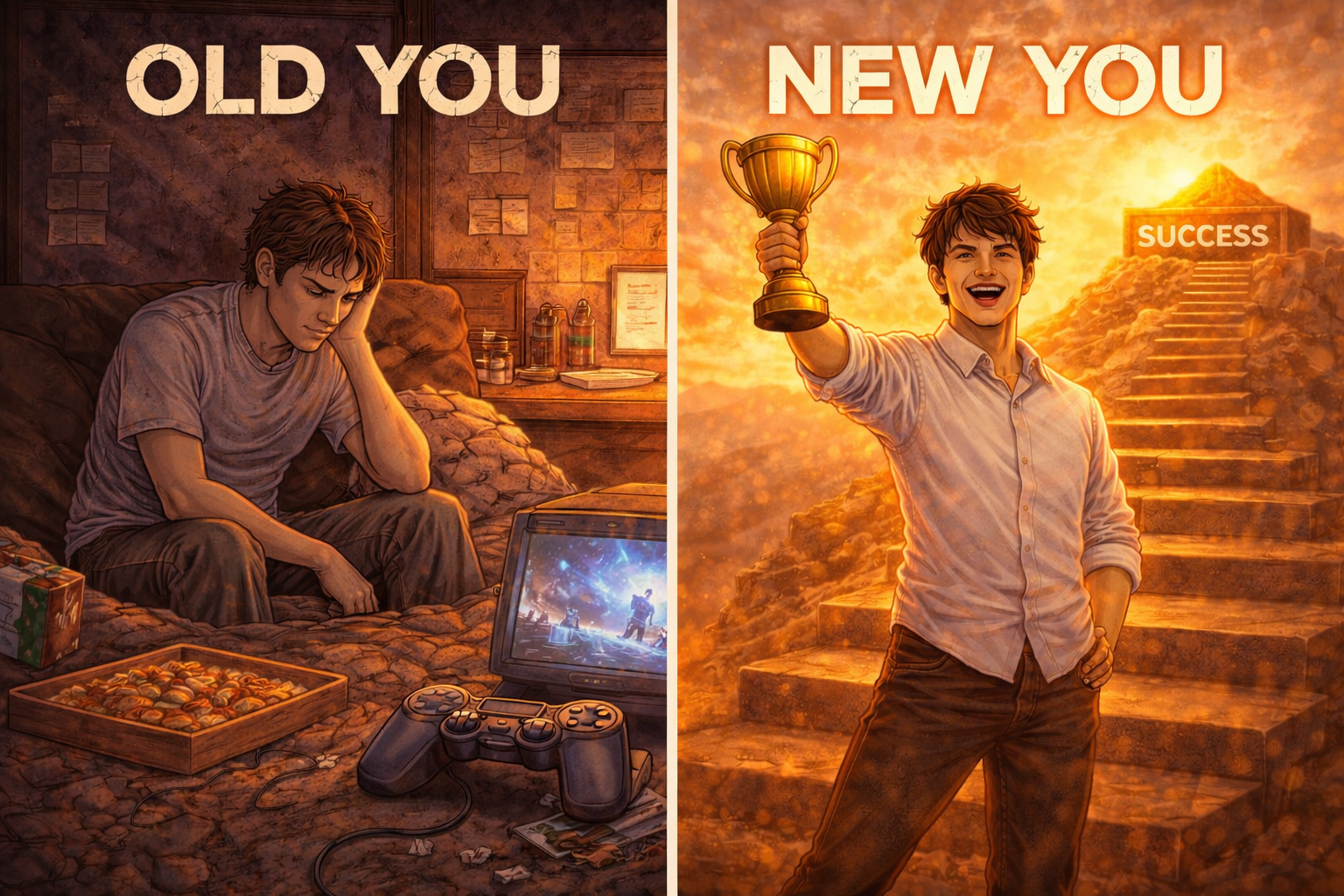
It will change when you stop protecting the old version of yourself and start building evidence for a new one.
TRAIN YOUR BRAIN WITH
"The Elon Code"
“You’re stuck because of a pattern you don’t even see.”
“You Start something…
"You lose momentum…
"You get distracted…
"you start again…
Sound familiar?
That’s not a motivation problem.
It’s a loop your brain keeps running automatically.
And until you interrupt it…
nothing changes.
But once you do?
Everything starts moving forward again.”



Discover how The Center for Personal Reinvention Life Optimization Coach Certification
Program™" can Support You to Dramatically Impact the Lives of Others with the same life-changing principles that Dr. Joe Rubino has used to transform lives for more than two decades!
Become a
Certified Life-Optimization Coach

Mindsetbooks.com | Copyright © 2026 All right reserved.

